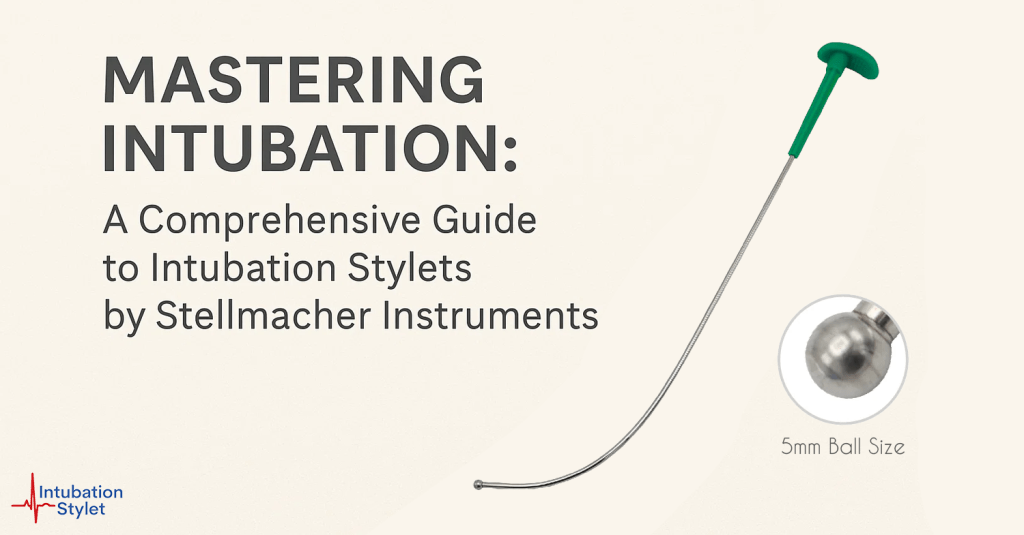
In emergency and critical care, intubation is one of the most vital procedures performed to secure a patient’s airway and maintain oxygenation. However, intubation isn’t always straightforward—particularly in difficult airways where precision, control, and the right tools are crucial. One of the most important tools in the intubation process is the intubation stylet.
At Stellmacher Instruments, we understand that mastering intubation requires not only skill but also the best instruments available. In this comprehensive guide, we’ll delve into the essential role of intubation stylets, their types, and how Stellmacher Instruments has revolutionized airway management with its cutting-edge technology.
What is an Intubation Stylet?
An intubation stylet is a thin, flexible device inserted inside the endotracheal tube (ET tube) to provide rigidity and help guide it through the patient’s airway during intubation. The main purpose of the stylet is to give the ET tube shape, control, and stability, allowing healthcare providers to maneuver the tube around obstacles in the airway such as swelling, blood, or anatomical variations, especially when dealing with a difficult airway.
In simple terms, an intubation stylet is a critical tool that aids in navigating the complex and often challenging anatomy of the upper airway, ensuring successful tube placement without causing harm or trauma to the patient.
The Importance of Intubation Stylets in Mastering Airway Management
While intubation may seem like a routine procedure, the reality is far more complex. A multitude of factors can complicate tube insertion, including anatomical differences, airway obstructions, patient positioning, and more. Here’s why mastering the use of intubation stylets is essential for successful intubation:
- Control and Precision: In an emergency, a few seconds can make the difference between life and death. An intubation stylet helps provide the necessary control and precision to guide the tube swiftly and accurately into the trachea. This is especially crucial in critical cases like trauma or patients with difficult airway anatomy.
- Support During Difficult Intubations: Emergency care often involves patients with challenging airway conditions. This could be due to facial trauma, obesity, or conditions like tumors and swelling. The rigidity provided by the stylet makes the ET tube easier to manipulate and insert, even in complex situations.
- Reducing the Risk of Complications: A poorly performed intubation can lead to a range of complications, such as trauma to the airway, esophageal intubation, or failure to secure the airway. A properly used intubation stylet minimizes these risks by giving the clinician a tool that facilitates smoother and more efficient tube placement.
- Increased Success Rates: Difficult intubations often require multiple attempts, which increase the risk of hypoxia and complications. A stylet helps increase the first-pass success rate of intubation, thereby reducing the time patients are without oxygen and improving their overall chances of recovery.
Types of Intubation Stylets: Choosing the Right One for the Job
Not all intubation stylets are created equal. They come in a range of designs, materials, and configurations, each catering to different needs. The choice of stylet depends on factors such as the patient’s condition, the clinical scenario, and the experience of the healthcare provider.
At Stellmacher Instruments, we offer a variety of intubation stylets to accommodate diverse airway challenges. Let’s take a look at the most common types:
- Standard Rigid Stylet: This is the most basic type of stylet and is made from a solid metal or plastic rod. It is commonly used for straightforward intubations where the airway anatomy is relatively uncomplicated. The rigidity helps maintain control over the ET tube as it’s maneuvered into place.
- Flexible Stylet: A flexible stylet is particularly useful when there’s a need for more adaptability during the intubation process. Its flexibility allows for gentle curvatures and easy maneuverability, making it an excellent option for patients with more difficult or unique airway anatomy.
- Preformed Stylet: A preformed stylet is shaped into a curve that can be customized for specific patient needs. This type of stylet is helpful when an airway requires precise positioning, such as in cases where a difficult airway or trauma is involved. Preformed stylets save time and increase the chances of success by reducing the number of adjustments needed.
- Magnetic Stylet: Magnetic stylets are an innovative advancement in airway management. These stylets contain a small magnet that attracts the ET tube to help guide it into the trachea, reducing the need for excessive manipulation. Magnetic stylets are particularly beneficial in reducing the risk of trauma and improving the intubation success rate in emergencies.
Key Features of Stellmacher Instruments’ Intubation Stylets
At Stellmacher Instruments, we take great pride in providing high-quality, reliable, and innovative tools for medical professionals. Our intubation stylets are designed to make airway management faster, safer, and more effective. Here’s why healthcare providers trust Stellmacher Instruments:
- Ergonomic Design for Optimal Control: Our stylets are designed for maximum ease of use. Their ergonomic shapes and contours ensure that healthcare professionals can comfortably hold and manipulate the device, even during high-pressure situations. This design helps reduce fatigue and increases precision during the procedure.
- Durable Materials for Longevity: Stellmacher Instruments’ intubation stylets are crafted from high-grade materials, ensuring they maintain their structural integrity and performance even under the most demanding conditions. They are designed to withstand repeated use without compromising on safety or functionality.
- Versatility for Different Patient Needs: Whether you’re performing intubation on an adult, a child, or a patient with a challenging airway, Stellmacher Instruments offers a wide range of stylets that cater to different sizes and requirements. This versatility allows clinicians to select the most appropriate tool for each specific case, improving the likelihood of success.
- Ease of Sterilization: Our intubation stylets are easy to clean and sterilize, helping medical professionals maintain strict hygiene standards. This reduces the risk of infection and ensures that the equipment remains safe and ready for use at all times.
- Precision Engineering for Safe Intubation: Every Stellmacher intubation stylet is precision-engineered to deliver exceptional performance. With smooth edges, rounded tips, and a reliable structure, these tools minimize the risk of airway trauma and ensure a safe and smooth insertion of the endotracheal tube.
How to Master Intubation with Stellmacher Stylets
Mastering intubation with stylets requires a combination of proper technique, thorough knowledge, and the right tools. Here are a few essential tips for healthcare providers to make the most of their intubation stylets:
- Pre-Intubation Planning: Before starting the procedure, assess the patient’s airway and prepare for potential complications. Ensure that the appropriate size and type of stylet is chosen based on the patient’s anatomy.
- Proper Insertion and Handling: Insert the stylet into the ET tube and mold it into a shape that provides both control and flexibility. Be mindful of the angle and depth of insertion to avoid airway trauma.
- Practice on Mannequins: Like any clinical skill, intubation with a stylet improves with practice. Training on mannequins and simulators will help you develop a feel for the tool and refine your technique.
- First-Pass Success: Always aim for first-pass success. A single attempt reduces the risk of hypoxia, airway trauma, and other complications. Proper use of the stylet can significantly improve the likelihood of achieving a successful intubation on the first try.
Conclusion
Intubation is a critical skill in emergency care, and mastering it is essential for saving lives. Intubation stylets are indispensable tools in achieving this goal. With the right technique, preparation, and the right instruments, healthcare providers can ensure that airway management is performed safely and effectively.
Stellmacher Instruments stands at the forefront of airway management innovation, offering a comprehensive range of intubation stylets that are designed to meet the demanding needs of medical professionals in high-pressure environments. With our precision-engineered, durable, and versatile stylets, clinicians can feel confident in their ability to master intubation and provide the best possible care to their patients.
Trust Stellmacher Instruments to help you master airway management with confidence and precision.


Leave a Reply