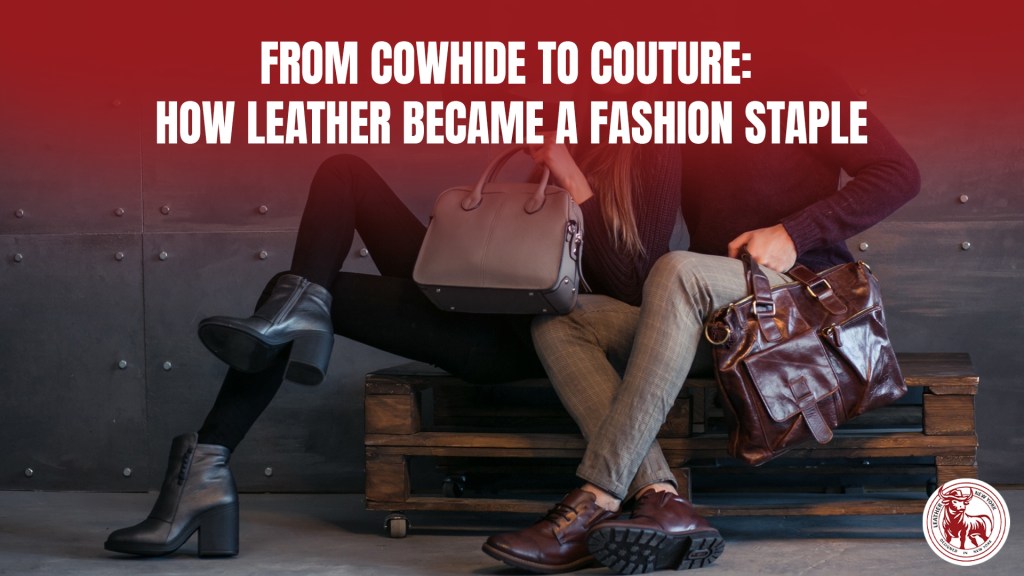
How did leather go from raw cowhide to the high-end fashion staple it now is? The answer spans centuries. Technological advancements, cultural shifts, and design innovation all contributed to making leather the material it is today. Originally, it was used for its utility – thick hides offered protection from the elements. Today, leather is found in everything from jackets, handbags and footwear to luxury interiors.
We’re exploring leather’s journey from function to fashion, and why it remains a material that captures emotion and imagination.
Origins
Leather is known to be one of the earliest materials used by humans for clothing. This dates back over 5,000 years. The era of tanned hides came much later, and these were used for armor, shoes, tents, and tool wraps because of their durability and weather resistant properties.
Tree bark and animal fats were the materials of choice to process leather early on, and this served to preserve the hides. The focus at this stage was rooted in practicality before dyes, finishes, or aesthetic refinements.
The Rise of Tanning
With the progression of civilizations came different tanning methods. The Ancient Egyptians used alum tanning for a finer leather. The Romans even purpose-built specialized tanning centers. By the Middle Ages, vegetable tanning, which made use of tannins from bark and leaves, became the standard in Europe.
Vegetable tanning yielded a firm brown leather that was then cut, shaped, and tooled for armor, saddles, and belts. This saw the formation of leather guilds, which passed down techniques and set trade standards.
The 19th century saw the advent of chrome tanning, which significantly sped up the process and resulted in softer, more flexible leathers.
The Era of Industrialization
Leather’s applications grew in the 1800s. The Industrial Revolution introduced mass production methods and new machines that aided cutting and stitching. Leather shoes, gloves, and bags came into the market, priced more accessibly for the growing middle classes.
While factories churned out leather goods at scale, high-end workshops were the antithesis, and they maintained hand-crafting traditions. The divide between luxury and mass-market leather would be, and still is, a notable part of the industry. In the city of Leather New York, leather workshops flourished, leading the way for other hubs to watch and learn.
Leather in the 20th Century
The early 20th century saw leather coming into fashion. Military garments found their way into civilian styles, and wardrobe staples like the bomber jacket and riding boot were all the rage. In the 1950s, leather jackets symbolized rebellion and youth culture, with Hollywood icons like Marlon Brando and James Dean sporting them for key roles.
In the 1960s and ’70s, leather took on bolder forms thanks to the punk aesthetic, with colour also being a part of it. It moved beyond basic black and brown into vibrant hues, and even experimental textures.
In contrast, big fashion houses like Hermès, Gucci, and Prada also began mainstreaming leather, lending it an air of refinement and luxury.
Material Innovation and Sustainability
Leather production today involves both traditional techniques and innovative approaches. Tanning has improved to reduce environmental impact, and some brands have shifted back to vegetable tanning for sustainability reasons.
Designers now employ a wide variety of finishes such as embossing, patenting, pebbling, distressing, and more on their leather pieces. These variations allow leather to be styled into both avant-garde runway shows and stay current.
In a typical leather goods store NYC visitors might find both classic pieces like an all-season leather jacket, or and cutting edge high-fashion items like architecturally shaped handbags. This really speaks to the versatility of the material.
Leather’s Dual Identity
Leather has come from utilitarian origins to its dominate in both the luxury and high-street markets. As a focus on sustainability and indigenous techniques gain traction in the fashion industry, leather continues to evolve thanks to its core values: durability, versatility, and timelessness.


Leave a Reply